- 6601 Cipriano Rd, Lanham, MD 20706, United States
- +1 202-569-4741
- info@kezzyshony.com

The main difference between knotless braids and box braids (knotless braids vs box braids) comes down to installation technique. Box braids start with a knot at the root and add hair from the very first section, while knotless braids start with your natural hair and gradually feed in braiding hair — creating a flatter, more natural-looking base.
Knotless braids are generally more comfortable and look more natural, while box braids are usually faster to install and slightly more budget-friendly. In practice, the choice may depend on scalp sensitivity, hair type, and how long you want the style to last. Both methods require careful sectioning and maintenance to keep the braid pattern neat.
Box braids get their name from the small, box-shaped sections used to part the hair before braiding. The stylist starts each braid by knotting the extension hair directly to your natural hair at the root, then braids straight down. This method has been a staple protective style for decades because it’s reliable, quick, and holds up well.
Knotless braids use a feed-in technique. The stylist starts braiding with only your natural hair, then gradually adds small amounts of extension hair as the braid progresses down the length. There’s no knot at the root, which reduces the initial tension and creates a smoother, flatter transition from scalp to braid.
This technique took off in popularity because it solves two common complaints about traditional box braids: the tightness at the root on day one, and the slightly bumpy, less-natural look where the knot sits.
Knotless braids are the clear winner here. Because there’s no knot pulling tightly at the root from the very first braid, the initial tension is significantly lower — which matters most in the first 24–48 hours after installation, when scalp sensitivity is highest. Box braids can feel heavier and tighter right out of the chair, though this usually eases within a couple of days for both styles.
Best for sensitive scalps: Knotless braids
Box braids are typically quicker to install since the technique is more straightforward — knot, braid, repeat. Knotless braids require more time and precision because of the gradual feed-in process, especially for smaller sizes or longer lengths. Expect knotless appointments to run noticeably longer, sometimes by several hours depending on size and length.
Best for a shorter appointment: Box braids
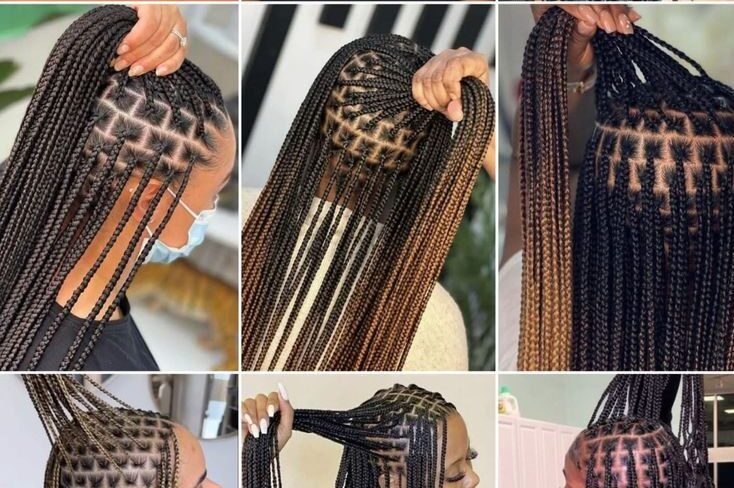
Knotless braids tend to look more natural at the root, laying flatter against the scalp and blending more seamlessly with your natural hair. Box braids have a more structured, uniform look from root to tip, which some clients actually prefer for a classic, defined style.
Best for a natural look: Knotless braids Best for a classic, structured look: Box braids
Because knotless braids take more time, skill, and technique, they’re usually priced higher than box braids of a comparable size and length. Box braids remain one of the more budget-friendly protective style options.
Best for budget: Box braids
Both styles typically last 4 to 8 weeks with proper care. Knotless braids often look neater for longer because there’s no bulky root knot creating early bumpiness as new growth comes in, but the actual structural wear time is similar between the two.
Best for looking fresh longer: Knotless braids (slight edge)
Both styles work well with a range of sizes, lengths, and added elements like curls, color, or beads. Knotless braids tend to hold up slightly better with smaller sizes since there’s less bulk at the root, while box braids handle larger, chunkier styles a bit more predictably.
Choose knotless braids if:
Choose box braids if:
No. The feed-in technique used in knotless braids is just as secure as a knotted install when done correctly by an experienced stylist. The lack of a knot affects comfort and appearance, not durability.
Yes. Many clients who start with box braids eventually switch to knotless once they experience the reduced tension, especially if they’ve dealt with scalp sensitivity or edge thinning in the past.
Knotless braids are generally considered gentler on the scalp and edges because of the reduced initial tension at the root. Box braids aren’t inherently damaging when installed properly, but the knot does create more immediate pulling that some clients find less comfortable, especially along the hairline.
Yes, though knotless braids are often recommended for children specifically because of the lower tension at the root — a meaningful difference for smaller, more sensitive scalps.
Q: Are knotless braids more expensive than box braids? A: Usually, yes — knotless braids take more time and technique to install, which is typically reflected in the price.
Q: Which lasts longer, knotless or box braids? A: Both typically last 4–8 weeks. Knotless braids often look neater for longer due to the flatter, knot-free root.
Q: Do knotless braids damage hair less than box braids? A: Knotless braids put less immediate tension on the root, which many stylists and clients consider gentler on the scalp and edges over time.
Q: Can I get knotless braids if I’ve had scalp issues with box braids before? A: Often, yes. The reduced root tension in knotless braids makes them a popular choice for clients who’ve experienced discomfort or edge thinning from tighter, knotted styles.
Q: Which style is better for a first-time braid client? A: Either can work well, but many first-timers appreciate the lower initial tension of knotless braids, especially if they’re unsure how their scalp will respond to a protective style.
Neither style is objectively “better” — the right choice depends on your priorities. If comfort, a natural look, and reduced root tension matter most, knotless braids are worth the extra time and cost. If you’re working with a tighter schedule or budget and prefer a classic, structured look, box braids remain a reliable, time-tested option.
Not sure which is right for your hair type and lifestyle? Book a consultation with Kezzyshony Hair Braiding Salon in Lanham, MD, and we’ll help you decide based on your hair texture, scalp sensitivity, and the look you’re going for.