- 6601 Cipriano Rd, Lanham, MD 20706, United States
- +1 202-569-4741
- info@kezzyshony.com

Knotless braids typically last 4 to 8 weeks, with most clients at Kezzyshony Hair Braiding Salon in Lanham, MD getting a solid 5 to 6 weeks of clean, comfortable wear before it’s time for a refresh. The exact timeline depends on braid size, hair growth rate, and how well the style is maintained at home.
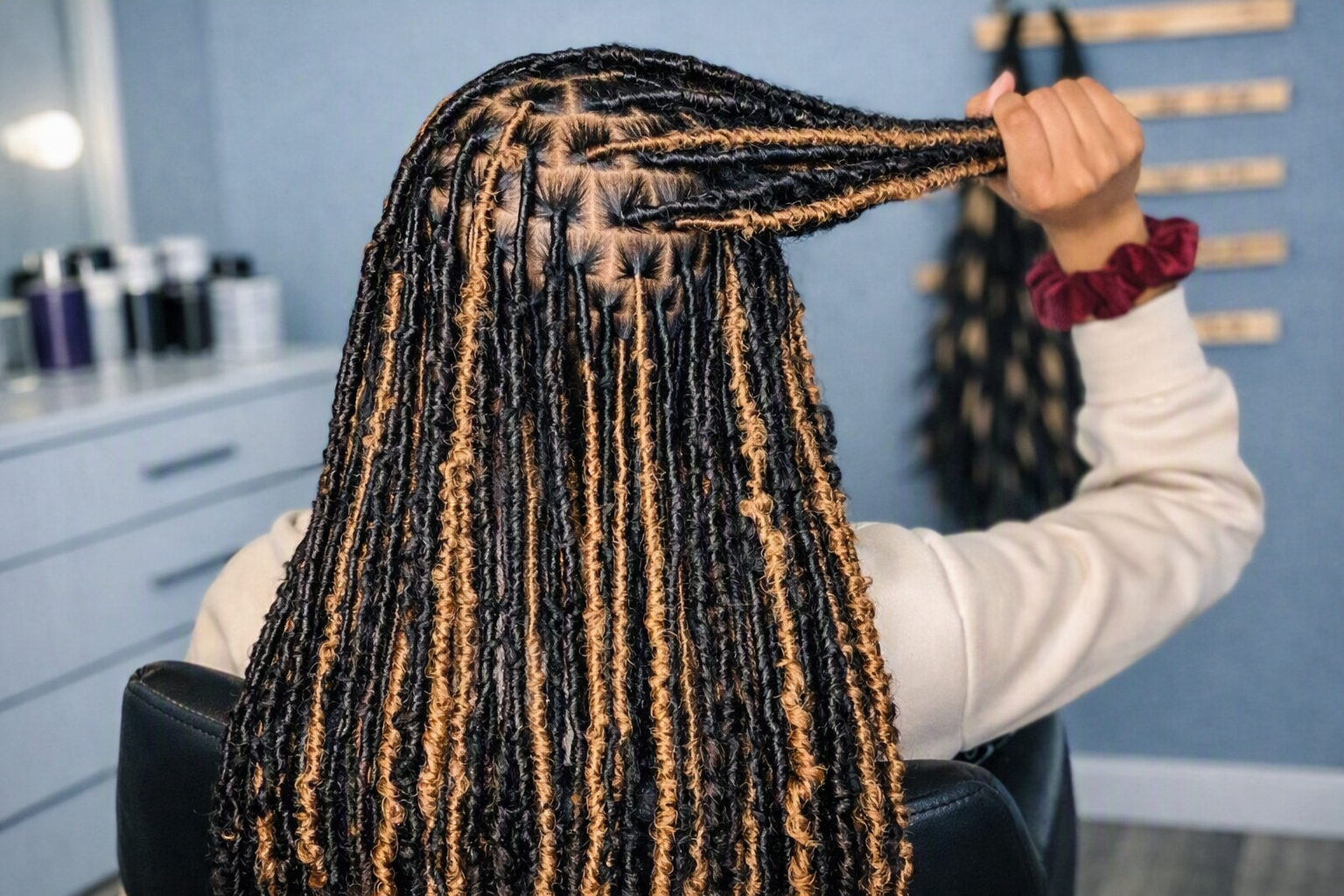
Knotless braids are installed by starting with your natural hair and gradually feeding in braiding hair as the braid progresses, rather than starting with a knot at the root. This creates a flatter, more natural-looking base — but it also means the braid’s structure holds up a little differently than a knotted style over time.
Because there’s no bulky knot pulling at the root from day one, knotless braids tend to look fresh for longer, even as new growth starts to show. That’s one reason they’ve become the go-to protective style for people who want longevity without sacrificing comfort.
This is the single biggest factor. Smaller braids distribute new growth stress across more individual sections, so they hold their shape longer — often the full 8 weeks. Medium braids sit in the middle. Larger, jumbo-style braids show new growth and looseness faster, sometimes needing attention as early as 4 weeks in.
Hair growth varies significantly by individual — averaging around half an inch per month, but ranging higher or lower depending on genetics, health, and hair care habits. Faster growth means more visible new growth at the root sooner, which can make even a perfectly intact braid look less neat.
Coarser, denser hair tends to hold braids more securely for longer. Finer or looser-textured hair may slip or loosen at the ends sooner, especially without regular maintenance.
A skilled, even install with consistent tension (not too tight, not too loose) holds up far better over time than a rushed one. This is part of why choosing an experienced braider matters as much for longevity as it does for comfort.
Friction is one of the biggest enemies of a fresh braid look. Sleeping on a cotton pillowcase without any protection speeds up frizz and loosening. A satin or silk bonnet, scarf, or pillowcase significantly slows this process down.
A dry, itchy scalp leads to more scratching — and scratching loosens braids at the root faster than almost anything else. Keeping the scalp lightly moisturized (without overloading it) helps braids stay put longer.
Regular exercise, swimming, or humid conditions can cause faster frizzing and swelling at the roots. This doesn’t mean you should avoid the gym — it just means a bit more maintenance (like tying hair back or using a swim cap) helps extend wear time.
Week 1–2 Braids look freshest here. Scalp may feel slightly tender initially, which is normal and should ease within a few days.
Week 3–4 Some frizz may start appearing near the front hairline and part lines, especially in high-friction areas. New growth becomes slightly visible depending on your growth rate.
Week 5–6 This is the sweet spot for most clients to consider a refresh. New growth is more noticeable, and edges may need re-laying for a polished look.
Week 7–8 Braids nearing the end of their comfortable lifespan. Root looseness and matting risk increase the longer you wait past this window, especially with denser new growth.
Beyond Week 8 Not generally recommended. Extended wear increases the risk of matting, tangling at the roots, and unnecessary tension on the scalp — which can lead to breakage rather than protection.
Yes — this is one of the most common questions clients ask when booking. As a general guideline:
If longevity is your top priority, sizing down is usually the most effective single decision you can make.
Q: Can knotless braids last 2 months? A: Yes. With proper care, smaller braid sizes, and a slower hair growth rate, knotless braids can comfortably last up to 8 weeks.
Q: Do knotless braids last longer than box braids? A: Both styles have a similar overall wear window of 4–8 weeks. Knotless braids often look neater for longer since there’s no bulky knot at the root creating early bumpiness.
Q: How often should I get my knotless braids redone? A: Most clients rebook every 5–7 weeks. Booking your next appointment before you leave your current one is a great way to stay consistent.
Q: Why do my braids feel loose after just 2 weeks? A: This is usually caused by hair texture, larger braid size, or friction from sleeping without protection — not necessarily an installation issue. Reviewing your nighttime and scalp care routine often solves this.
Q: Is it bad to keep knotless braids in for 10 weeks? A: Generally, yes — wearing braids significantly past the 8-week mark increases the risk of matting, tangling, and tension damage at the root, even if the braids still look okay on the surface.
Q: Do smaller knotless braids hurt more or last longer? A: Smaller braids generally last longer, and while initial tension can feel more noticeable due to the number of sections, they typically settle within a few days just like any other size.
Knotless braids are one of the most versatile and comfortable protective styles available — and with the right size, installation, and aftercare routine, they can comfortably carry you through 4 to 8 weeks of low-maintenance, good-hair-day confidence. Ready to find out what size and timeline works best for your hair? Book your appointment with Kezzyshony Hair Braiding Salon in Lanham, MD, and we’ll help you plan a style that fits your lifestyle.